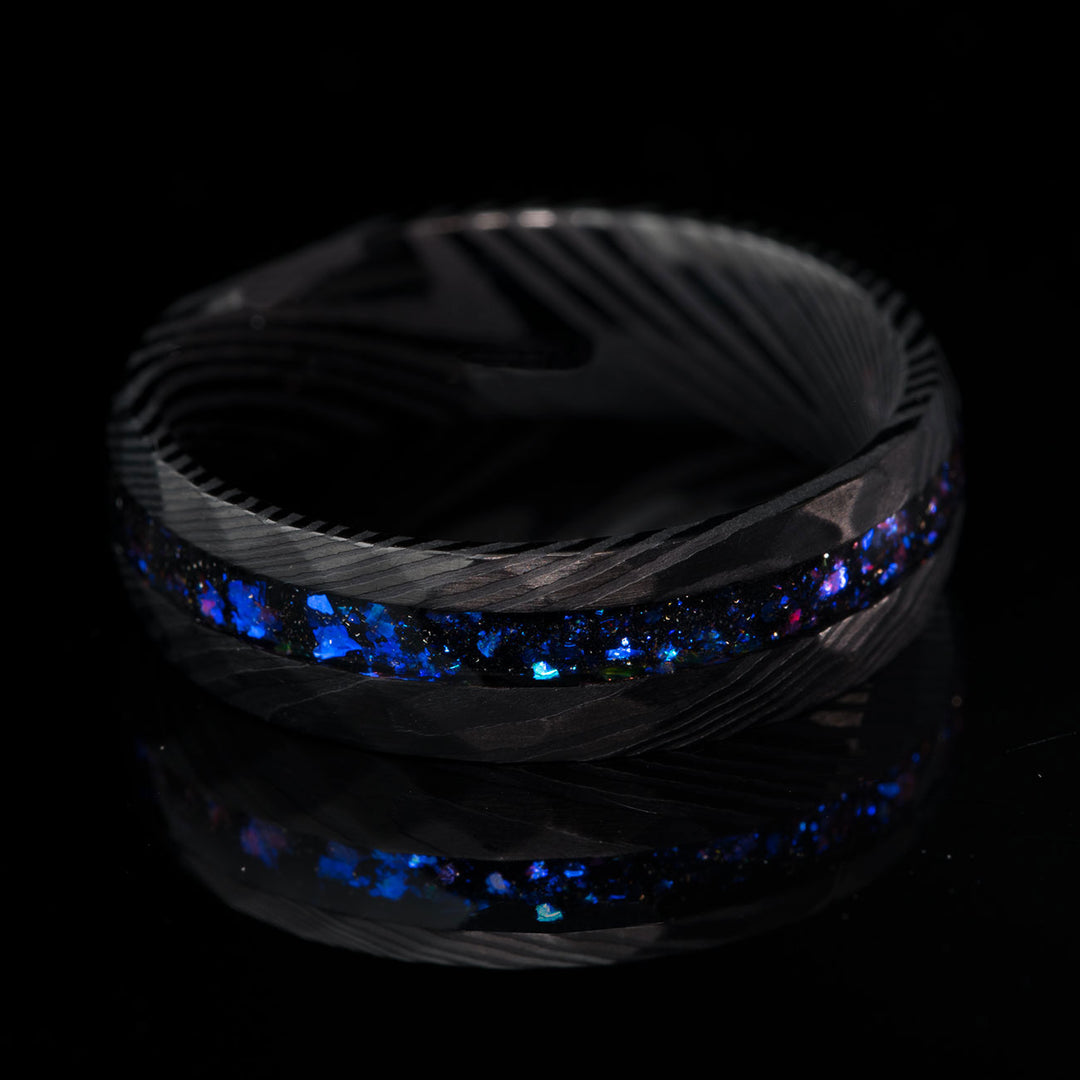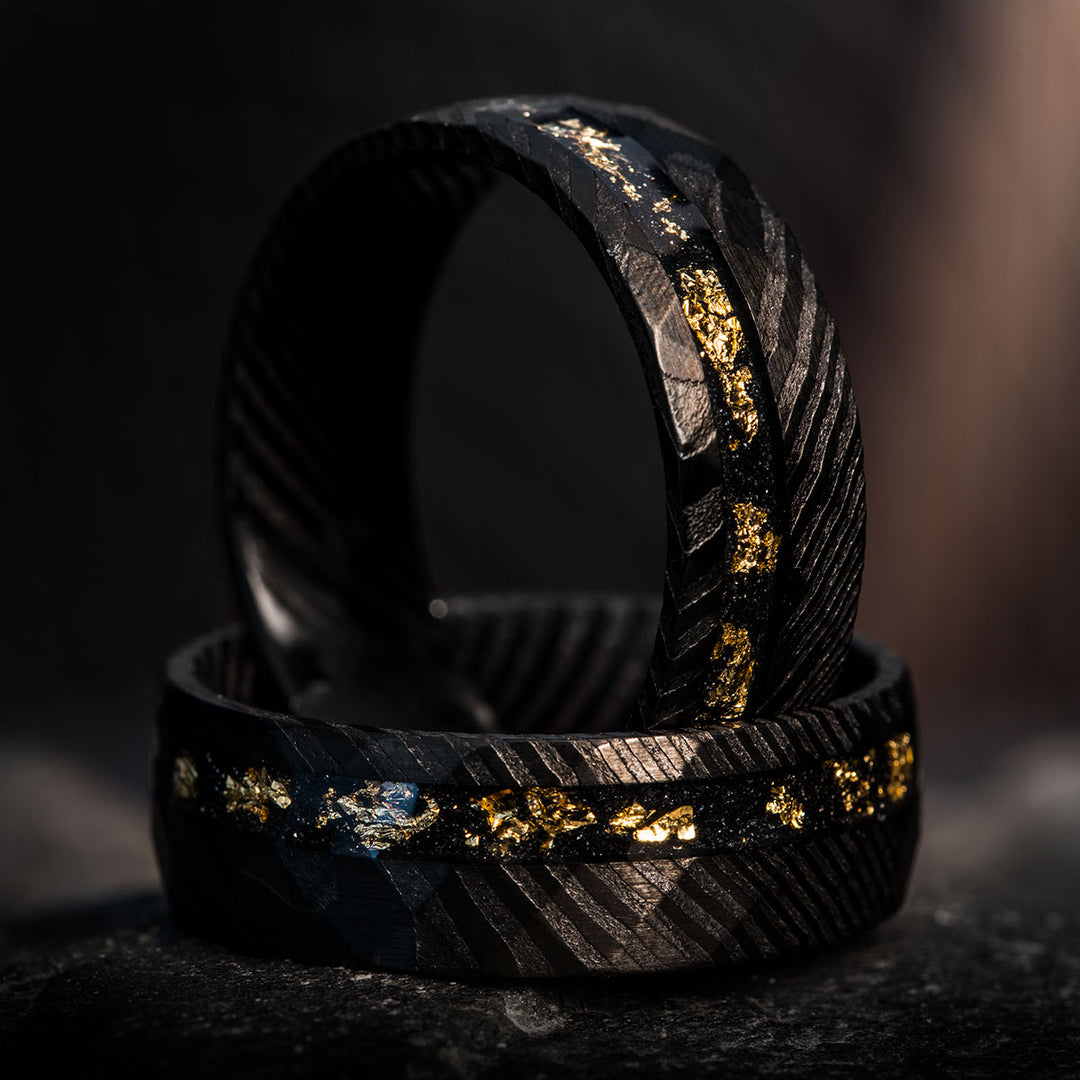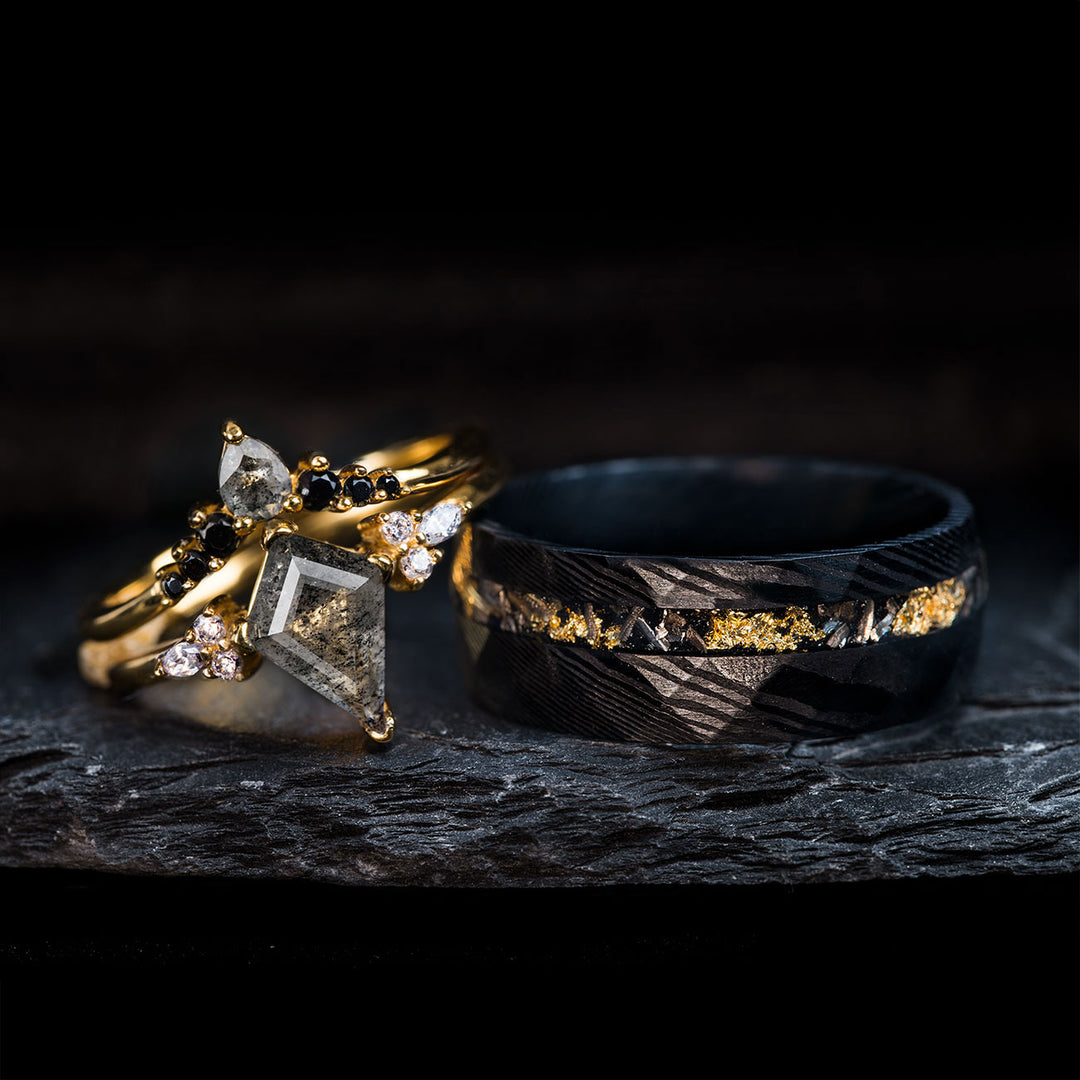


Wood inlay rings can work well for everyday wear, but they are not automatically waterproof or maintenance-free. Their performance depends on how the wood, resin or epoxy, metal structure, inlay setting, bonding, and finish work together—and whether those limits fit your routine. Someone who works at a desk and removes a ring for messy tasks faces different demands than someone who lifts weights, works with tools, swims, or handles chemicals every day.
The practical question is not simply, “Are wood inlay rings durable?” Check the exact construction, exposure guidance, sizing policy, warranty, returns, and repair options before treating one as an everyday wedding band.
What Makes Wood Inlay Rings Hold Up?
Ring Durability comes from the interaction between the natural inlay and the surrounding structure. Wood treatment, resin, the metal sleeve, setting, bond or enclosure, and surface finish all deserve separate attention; no single feature proves that a ring is waterproof or impact-proof.
Wood Type, Stabilization, and Resin
Wood species and treatment can affect how an inlay performs, but the available evidence does not support a universal performance ranking. Stabilized wood may be part of the construction, while resin or epoxy may fill, bond, or visually protect part of the inlay. These terms are useful starting points—not guarantees that every ring will tolerate soaking, hard impacts, or chemicals.
When comparing wood wedding band styles, look for a clear description of the wood treatment, the role of any resin or epoxy, and the product’s specific care limits. If a listing uses broad words such as “durable” without explaining the construction or maintenance, ask the seller for the missing details.
The Metal Sleeve and Inlay Setting
The metal structure and the way the inlay is supported can affect what the ring is exposed to during normal use. Use this table as a set of questions for the seller, not as a promise that one construction will outlast another.
| Detail to check | Why it matters during wear | Question to ask |
|---|---|---|
| Metal structure | A surrounding metal body may provide the main shape, while the inlay remains a separate material with its own limits. | What metal forms the ring, and how does it support the inlay? |
| Inlay depth | A shallow or exposed inlay may experience more direct contact with surfaces than a protected design. | How deep is the inlay, and which areas remain exposed? |
| Edge protection | Edges can be vulnerable to knocks, snagging, and finish wear. | Are the inlay edges recessed, covered, or exposed? |
| Bonding or enclosure | The attachment method helps explain what could happen if the inlay lifts or the finish breaks through. | Is the inlay bonded, enclosed, mechanically supported, or a combination? |
| Seller support | Repair, refinishing, replacement, and warranty terms are part of practical ownership. | What happens if the inlay cracks, lifts, swells, or loses its finish? |

Finish, Seals, and Visible Wear
A finish can protect the appearance without making the entire ring immune to damage. Separate surface condition from structural condition when assessing durability.
Before buying, verify:
- Finish description: Does the listing explain the seal, coating, or other surface treatment?
- Cleaning limits: Does it specify whether to avoid soaking, abrasives, alcohol-based products, ultrasonic cleaners, or harsh chemicals?
- Appearance expectations: Which changes count as normal finish wear, and what indicates damage?
- Refinishing path: Does the maker describe refinishing or assessment, or only offer a general warranty?
- Damage exclusions: Are deep scratches, swelling, impact damage, water exposure, or finish failure excluded?
A ring can remain wearable as a metal structure while its visible inlay or finish deteriorates. That distinction matters if preserving the original appearance is important to you.
Daily Wear Exposes the Ring to Four Stressors
Daily wear is not one test. Moisture, impact, heat, and chemicals create different demands, so follow the maker’s specific guidance rather than assuming a sealed ring is suitable for every activity. The maker’s care guidance for wood and antler inlays describes natural inlay as porous and warns that moisture or temperature changes can contribute to swelling, cracking, bending, or finish damage.
- Moisture: Damp hands or an occasional splash are not the same as showering, swimming, soaking, or exposure to pool chemicals. Unless the product specifically permits those activities, remove the ring and dry it promptly instead of treating it as waterproof.
- Impact: Tools, gym equipment, door frames, lifting, and hard surfaces can chip a finish, affect an exposed inlay, or stress the setting. Remove the ring for tasks where repeated knocks are part of the job, or confirm the maker’s limits first.
- Heat: Temperature changes and high-heat tasks may affect natural wood, resin, adhesives, or the finish. Ask for product-specific guidance before wearing the ring around heat rather than relying on a generic material label.
- Chemicals: Household cleaners, solvents, pool chemicals, personal-care products, and abrasive substances can create exposure beyond ordinary handwashing. Follow the product instructions and remove the ring when they do not cover the situation.
That is why a wood inlay wedding band may work well for one daily routine and poorly for another. Frequent swimmers, manual workers, or people who want an always-on ring should treat removal habits and a backup plan as part of the purchase decision.
Wood Inlay Versus All-Metal Bands
Compare wood inlay and all-metal bands by care burden, exposure, appearance over time, repairability, resizing, and style—not by one universal durability score. An all-metal band may be the more straightforward choice for minimal maintenance, while wood inlay offers natural visual character with more construction-specific questions.
| Buyer concern | Wood inlay band | All-metal band | Buyer check |
|---|---|---|---|
| Moisture routine | Requires product-specific guidance; sealing does not establish universal waterproofing. | Usually presents fewer natural-material variables, but the exact finish and maker instructions still matter. | Will you remove the ring for showers, swimming, or soaking? |
| Impact-heavy work | Exposed inlay and finish may add points to inspect after repeated knocks. | Has no wood inlay, but its finish, shape, and metal can still show wear. | Do tools, lifting, or equipment regularly strike your hands? |
| Heat and chemicals | Wood, resin, adhesive, and finish may each have exposure limits. | The exact metal and finish determine the relevant care questions. | Which cleaners, solvents, heat sources, or pool chemicals are part of your routine? |
| Visible surface aging | The inlay or finish may change even when the ring remains structurally wearable. | Surface wear is usually judged mainly by the metal and its finish. | How much natural aging are you comfortable seeing? |
| Cleaning | Follow the maker’s instructions; gentle wiping and prompt drying are a conservative baseline. | Cleaning may be simpler, but use the seller’s instructions for the exact finish. | Can you follow the required care consistently? |
| Repair or refinishing | Ask whether the maker assesses, refinishes, repairs, or replaces damaged inlays. | Ask about polishing, refinishing, or replacement for the exact metal and design. | Is there a documented support path after damage? |
| Resizing and fit | Inlay construction may limit future resizing or make replacement the available option. | Resizing also varies by metal and design, but the policy may be more familiar. | What are the sizing, return, and future-fit terms? |
| Style | Offers natural variation and a distinctive wood-and-metal look. | Provides a more uniform material appearance and simpler visual choice. | Does the style justify the maintenance you will accept? |
If you want to compare another material category by its construction and care requirements, tungsten ring options can serve as a navigation point—not proof that every listed band has the same performance.

How to Care for a Wood Inlay Ring
The maker’s instructions should control because wood, resin, adhesives, and finishes vary. A conservative routine is to follow the exact product guidance, limit high-exposure tasks, clean only as directed, dry the ring promptly, and stop wearing it if the inlay or finish visibly changes.
- Read the exact care instructions before wearing it. Confirm whether the seller permits incidental water, showering, swimming, heat, or exposure to specific products.
- Remove it for exposure beyond those limits. High-impact work, soaking, pool chemicals, solvents, and messy tasks are good reasons to take it off rather than guess.
- Clean only as directed. The supplied maker guidance supports gentle wiping and advises avoiding soaking, abrasives, alcohol-based products, ultrasonic cleaners, and harsh chemicals. Do not add oil, polish, or a household cleaner unless the exact product instructions call for it.
- Dry it promptly. After permitted contact with moisture, use the method specified by the maker and do not leave the ring wet or submerged.
- Store it separately. Keep it away from objects that could scrape the finish or catch on an exposed inlay.
- Inspect before putting it back on. Look for cracking, lifting, swelling, deep scratches through the finish, bending, or other visible changes.
- Contact the maker if damage appears. Set the ring aside and ask about assessment, refinishing, repair, replacement, warranty coverage, and expected next steps. Damage does not automatically mean a repair is available.
For a concise brand-specific reference, use this wood ring care routine, then confirm that the instructions apply to the exact ring you are considering.
Everyday-Wear Buying Checklist
Choose the band whose documented construction, exposure limits, care routine, sizing, and support terms fit your habits—not the one with the strongest durability wording.
Before adding one to your cart, verify:
- wood treatment, resin or epoxy, metal, inlay support, edge protection, and finish;
- water, heat, chemical, impact, and cleaning restrictions;
- sizing, ring-sizer availability, returns, resizing limits, warranty exclusions, and repair support;
- whether the limits fit your work, exercise, travel, and water habits.
If the listing leaves important questions unanswered, contact the seller before ordering. You can browse wood wedding bands for category navigation, but verify the exact listing and its policies first.

FAQs
Q1: Can You Wear a Wood Ring Every Day If You Work With Your Hands?
You can, but hand-intensive work raises the chance of repeated knocks, vibration, snagging, sweat, and chemical exposure. Check the maker’s limits for your actual tasks, and consider removing the ring during tool use or lifting. A removable backup band may be more practical than treating any wood ring as job-site ready.
Q2: Are Wood Inlay Rings Safe to Wear in the Shower or Pool?
Do not assume they are. A splash, shower, prolonged soaking, swimming, and pool chemicals are different exposures, and no universal waterproof rating is supported here. Check the exact product instructions; if they are silent, remove the ring for bathing and swimming and dry it promptly after permitted contact.
Q3: Can a Damaged Wood Inlay Ring Be Repaired?
Possibly, depending on whether the problem is a surface finish, cracked inlay, lifted section, swelling, or structural damage—and on the maker’s services and warranty. Stop wearing it after visible damage, photograph the issue, and ask whether assessment, refinishing, repair, or replacement is available before attempting any home fix.
Q4: Do Wood Inlay Rings Need to Be Resized?
They may, especially if your measured size changes, but resizing can be restricted by the inlay and ring construction. Before ordering, confirm the sizing method, whether a ring sizer is available, the return window, and whether the seller offers resizing, replacement, or only a size exchange.
Q5: How Long Should a Wood Inlay Ring Last With Proper Care?
There is no reliable category-wide year estimate. Set expectations using the exact construction, your exposure routine, how strictly you can follow care instructions, your tolerance for appearance changes, and the warranty or repair path. If the seller provides no service-life basis, do not treat a broad longevity claim as a guarantee.