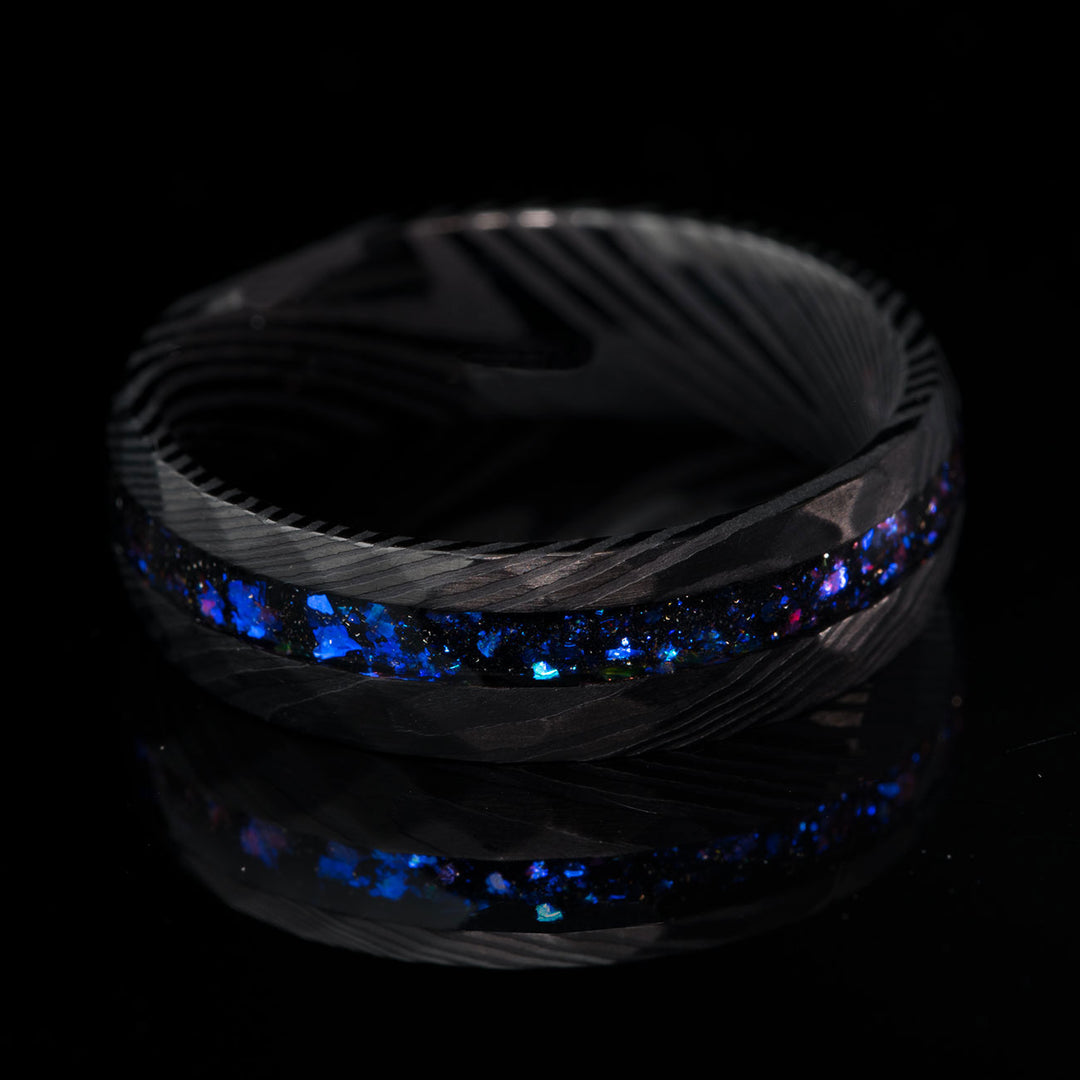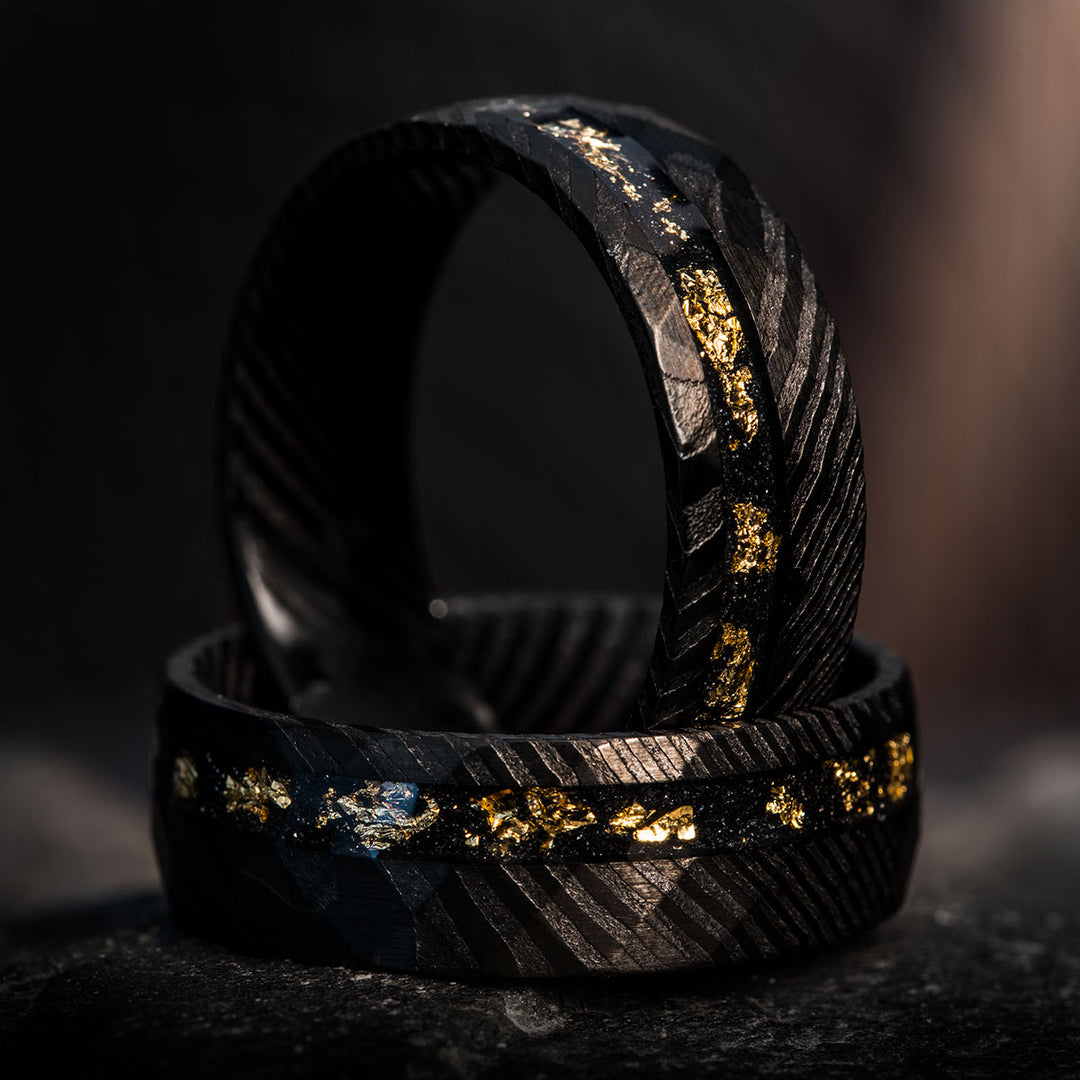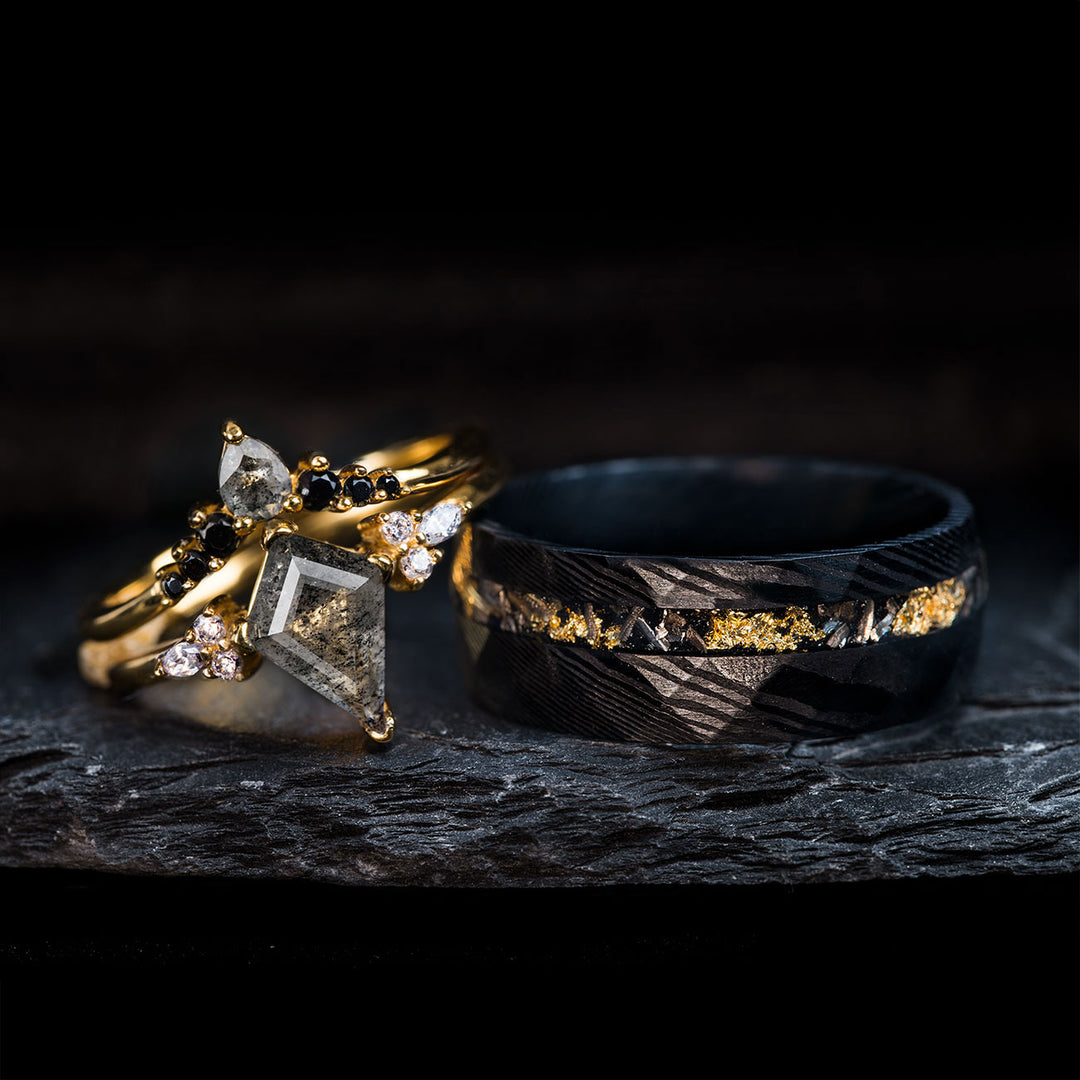


Say goodbye to conventional plain bands. Men's opal wedding rings bring vibrant fire, dynamic play-of-color, and unmistakable personality to fine jewelry. While breathtaking, these unique gemstones require specialized care. This comprehensive guide examines the pros, cons, and essential maintenance practices to help you determine if an opal wedding band fits your personal lifestyle.

What Exactly is an Opal?
Unlike crystalline gemstones such as diamonds or sapphires, an opal is composed of microscopic spheres of amorphous silica packed tightly with natural water content. This unique micro-structure gives the gem its distinctive optical properties.
Technically classified as hydrated amorphous silica, opal contains trapped water (typically 3% to 21%). As light enters the stone and passes through its internal silica spheres, it diffracts into brilliant flashes of spectral hues—an optical phenomenon known as play-of-color. Because this internal structure forms naturally and randomly, no two natural opals are ever identical.
Common Types of Opal Used in Men's Jewelry
When exploring opal rings for men, you will encounter several primary varieties:
- Black Opal: Featuring a dark body tone ranging from deep gray to black, this variety offers the most striking and dramatic play-of-color contrast.
- White/Light Opal: Features a translucent white or light body tone with subtle, pastel color flashes.
- Fire Opal: Characterized by warm, vibrant background tones of yellow, orange, and red, originating primarily from Mexico.
- Boulder Opal: Mined in Queensland, Australia, this variety forms naturally embedded within ironstone matrix rock, creating organic patterns and high structural stability.
- Crystal Opal: Highly transparent or semi-transparent stone with sharp, internal spectral fire.
- Ethiopian Opal: Renowned for vivid play-of-color patterns, though hydrophane in nature and particularly sensitive to moisture absorption and rapid humidity changes.
Solid Opal vs. Doublets vs. Triplets
Understanding the difference between solid opals and assembled stones is critical before purchasing:
| Feature | Solid Opal | Opal Doublet | Opal Triplet |
|---|---|---|---|
| Structure | Single solid piece of natural opal | Thin natural opal layer bonded to a dark backing | Thin opal slice sandwiched between dark backing and clear quartz cap |
| Visual Appeal | Authentic natural depth | Color accentuated by dark base | High gloss with enhanced color contrast |
| Durability | Requires careful handling | Reinforced base support | Top cap protects against surface abrasions |
| Value Tier | Premium investment grade | Mid-range value | Accessible and budget-friendly |
Natural vs. Lab-Created Opal
Lab-created or synthetic opals share the same chemical composition and silica structure as mined stones. Grown in controlled laboratory environments, synthetic opals provide vivid color patterns alongside enhanced durability and accessibility.
Why Choose an Opal Wedding Ring? The Benefits and Appeal
Modern grooms choose an opal wedding ring for its unmatched visual distinction and profound symbolic character.
Breathtakingly One-of-a-Kind Appearance
The primary appeal of opal lies in its mesmerizing optical fire. Every gem refracts ambient light differently as your hand moves, creating an ever-changing display of color. Because every stone is entirely unique, your wedding band is a singular custom piece. It represents one of the most compelling non-traditional men's wedding ring designs available today.

Rich Symbolism and Meaning
Throughout jewelry history, opals have symbolized passion, hope, creativity, and fidelity. As the traditional October birthstone, an opal band also offers an added layer of personal significance for autumn anniversaries and birthdays.
Bold, Distinctive Individuality
Inlaid opal bands stand apart from standard monochromatic metal rings. An opal ring serves as an expressive conversation piece, demonstrating confidence and refined personal taste.
Versatile Style and Metal Combinations
From fiery crimson highlights in a men's fire opal wedding band to deep oceanic blues encased in modern metals, opal pairs effortlessly with varied aesthetics and lifestyles.
Key Considerations and Limitations of Opal Rings
While visually stunning, opals require thoughtful handling. Understanding the physical properties of opal helps ensure long-term satisfaction.
Mineral Hardness and Scratch Resistance
On the Mohs hardness scale, opal ranks between 5.5 and 6.5. Because common environmental quartz dust rates at 7.0 on the Mohs scale, abrasive surfaces can scratch an unprotected opal. For men working in heavy manual trades or pursuing high-impact sports, wearing a protective setting is essential.
Sensitivity to Thermal Shock
Because natural opals contain bound water within their silica structure, rapid temperature extremes (such as moving from freezing outdoor temperatures directly into high-heat saunas) can induce fine microscopic fractures known as crazing.
Chemical and Solvent Vulnerability
Harsh household chemicals, including chlorine bleach, strong industrial soaps, and acetone, can degrade the polished surface finish and compromise the adhesive integrity of inlaid doublets and triplets.
Moisture Absorption Considerations
Certain porous opal varieties, particularly hydrophane stones, can absorb surrounding liquids. While brief handwashing is harmless, prolonged submersion during swimming or dishwashing should be avoided to preserve maximum optical brilliance.
How to Care for an Opal Ring for Maximum Longevity
Following consistent, gentle maintenance practices will keep your opal wedding band radiant for decades.
Practical Daily Wear Guidelines
Wearing an opal ring daily is entirely practical when combined with simple preventative habits:
- Remove before manual labor: Take your ring off before weightlifting, automotive repair, landscaping, or handling construction tools.
- Avoid direct impacts: Be mindful of hard knocks against metal door handles, stone countertops, or gym equipment.
- Apply grooming products first: Allow colognes, lotions, and sunscreens to dry completely before putting on your ring.
- Avoid water immersion: Remove your band before swimming in chlorinated pools, relaxing in hot tubs, or washing dishes.
Safe Cleaning Techniques
Proper cleaning preserves the stone's polished surface without risking damage:
- Routine maintenance: Wipe the band clean using a dry, lint-free microfiber jewelry cloth.
- Removing residue: Dampen a soft cloth with lukewarm water and a drop of mild dish soap. Wipe the setting gently, rinse briefly, and dry completely with a clean towel.
- Equipment warnings: Never clean opal jewelry using ultrasonic cleaners or steam machines, as high-frequency vibrations and heat cause cracking.
Safe Storage Practices
When not wearing your opal band:
- Store separately: Keep the ring in a dedicated fabric pouch or lined box compartment away from harder diamond and sapphire jewelry.
- Maintain moderate humidity: Avoid storing opals in desiccated, high-heat environments. In arid climates, keeping the ring near a lightly moistened cloth inside an enclosed case helps maintain ambient moisture balance.
Long-Term Professional Maintenance
Have an experienced jeweler inspect the setting prongs and channel bezels annually. If the stone sustains light surface wear over years of use, a specialized lapidary can polish away fine surface marks to restore its original luster.
Choosing the Ideal Setting and Metal for Men's Opal Rings
Selecting the right protective architecture ensures your opal band withstands everyday wear.

Choosing the Right Band Metal
The structural metal provides essential protection for the gemstone inlay:
- Precious metals (Gold, Platinum): Provide classic warmth and prestige. Platinum offers exceptional resistance to metal loss over time.
- Contemporary metals (Tungsten Carbide, Titanium): Provide unmatched surface scratch resistance, making them the preferred framework for active lifestyles.
Protective Ring Settings Compared
The mounting style determines how well the gemstone is shielded from incidental side impacts:
| Setting Style | Protection Level | Structural Advantage |
|---|---|---|
| Channel Inlay Setting | Maximum | The opal sits flush inside a protective metal groove, completely shielding the stone's edges. |
| Bezel Setting | High | A raised metal collar encircles the entire gemstone perimeter to absorb lateral impacts. |
| Prong Setting | Low | Leaves gem flanks exposed; best suited for formal wear rather than heavy daily use. |

THE ORION
Frequently Asked Questions About Men's Opal Wedding Rings
Q1: Can men really wear opal wedding rings every day?
Yes, with mindful wear. If you work in an office setting or take care to avoid heavy impacts, daily wear is entirely feasible. However, if your daily routine involves heavy manual labor or weightlifting, you should remove the ring during those activities to prevent damage.
Q2: How durable is an opal compared with other wedding ring gemstones?
Opals are substantially softer than traditional gems. Scoring 5.5 to 6.5 on the Mohs hardness scale, opal is softer than ruby and sapphire (9.0) or diamond (10.0), making protective channel inlays and bezel mountings essential for long-term wear.
Q3: Is it okay if my opal wedding ring becomes wet?
Brief contact during routine handwashing is safe, but prolonged soaking (such as swimming, showering, or washing dishes) should be avoided. Excessive water exposure can temporarily alter the color transparency of porous Ethiopian opals and deteriorate the adhesive backing in assembled doublets or triplets.
Q4: Are opal wedding rings expensive?
Pricing varies widely based on the opal variety, grading, stone construction, and metal setting. An assembled opal triplet set in sterling silver or titanium is accessible and budget-friendly, whereas a rare, high-grade solid black opal mounted in solid gold or platinum represents a premium luxury investment.
Q5: What should I do if my opal gets scratched or cracked?
Minor surface scuffs can often be buffed and polished out by an experienced lapidary specializing in opal restoration. However, deep structural fractures or internal crazing caused by thermal shock are typically irreversible, requiring stone replacement.