

| Feature | Forged Carbon Fiber Ring | Carbon Fiber Inlay Ring |
|---|---|---|
| Construction | Solid carbon composite (No metal) | Metal band (Titanium/Tungsten) with carbon insert |
| Visual Pattern | Unique, marbled, or “shredded” look | Traditional, uniform woven (checkerboard) pattern |
| Weight | Feather-light; barely noticeable | Heavier; has the “heft” of traditional jewelry |
| Comfort/Feel | Warm to the touch; skin-friendly | Cool, metallic feel; traditional ring weight |
| Durability | High impact resistance; resin may scratch | Metal core is typically harder; inlay coat may chip |
| Best For | Active lifestyles, athletes, and metal allergies | Wedding bands and those who prefer a solid, heavy feel |
If you want a ring that doesn’t weigh you down, carbon fiber is a great choice. It is a modern alternative to traditional metals. You will mostly find two types: forged carbon and inlay designs. Forged rings are made entirely of carbon composite, giving them a unique look. Inlay rings use a metal base for extra weight and strength. We compared how they feel and hold up over time. This helps you pick a band that matches your style and activity level.
What Are Carbon Fiber Rings Made Of?
At its simplest, carbon fiber is a composite. It consists of extremely thin strands of carbon atoms twisted together like yarn. These fibers are then soaked in a hard resin (plastic) to hold them in place. The result is a material famous for a high strength-to-weight ratio. It can take a lot of pressure without being heavy, which is exactly why it makes such a great carbon fiber ring.
Two Main Carbon Fiber Ring Constructions
Manufacturers generally build these rings in two ways:
- Forged carbon: This is a solid piece of composite. There is no metal involved. The ring is shaped from a single block of resin and chopped fibers.
- Inlay carbon fiber: This uses a metal band, like titanium or tungsten, as a base. A thin strip of carbon fiber is tucked into a groove in the center for decoration.
While both use carbon fiber, they are fundamentally different in structure. One relies entirely on the composite, while the other uses metal to do the heavy lifting.
What Is a Forged Carbon Ring?
Forged carbon is the choice for people who want to ditch metal entirely. It has a messy, organic look that stands out from the straight lines usually found in jewelry stores.
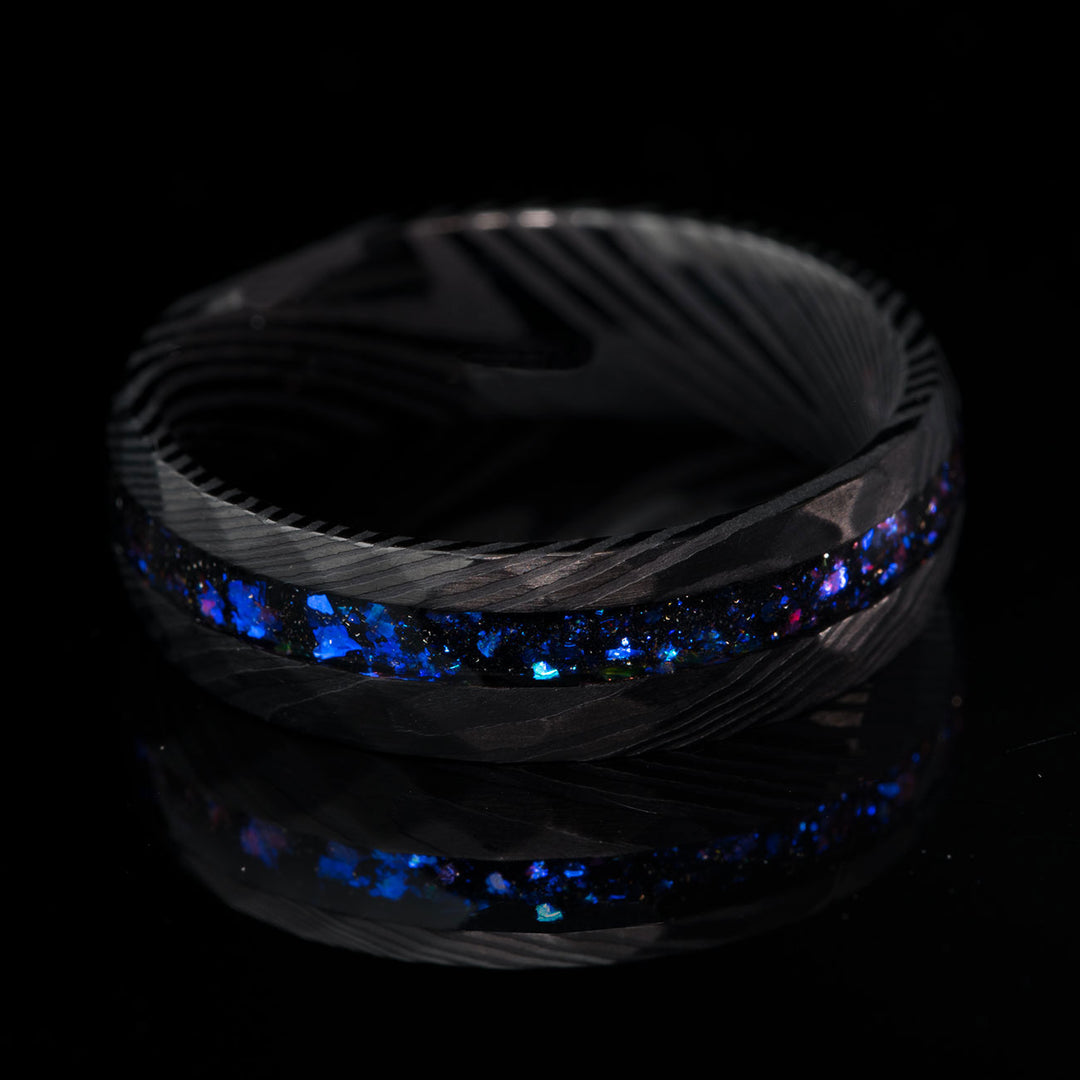
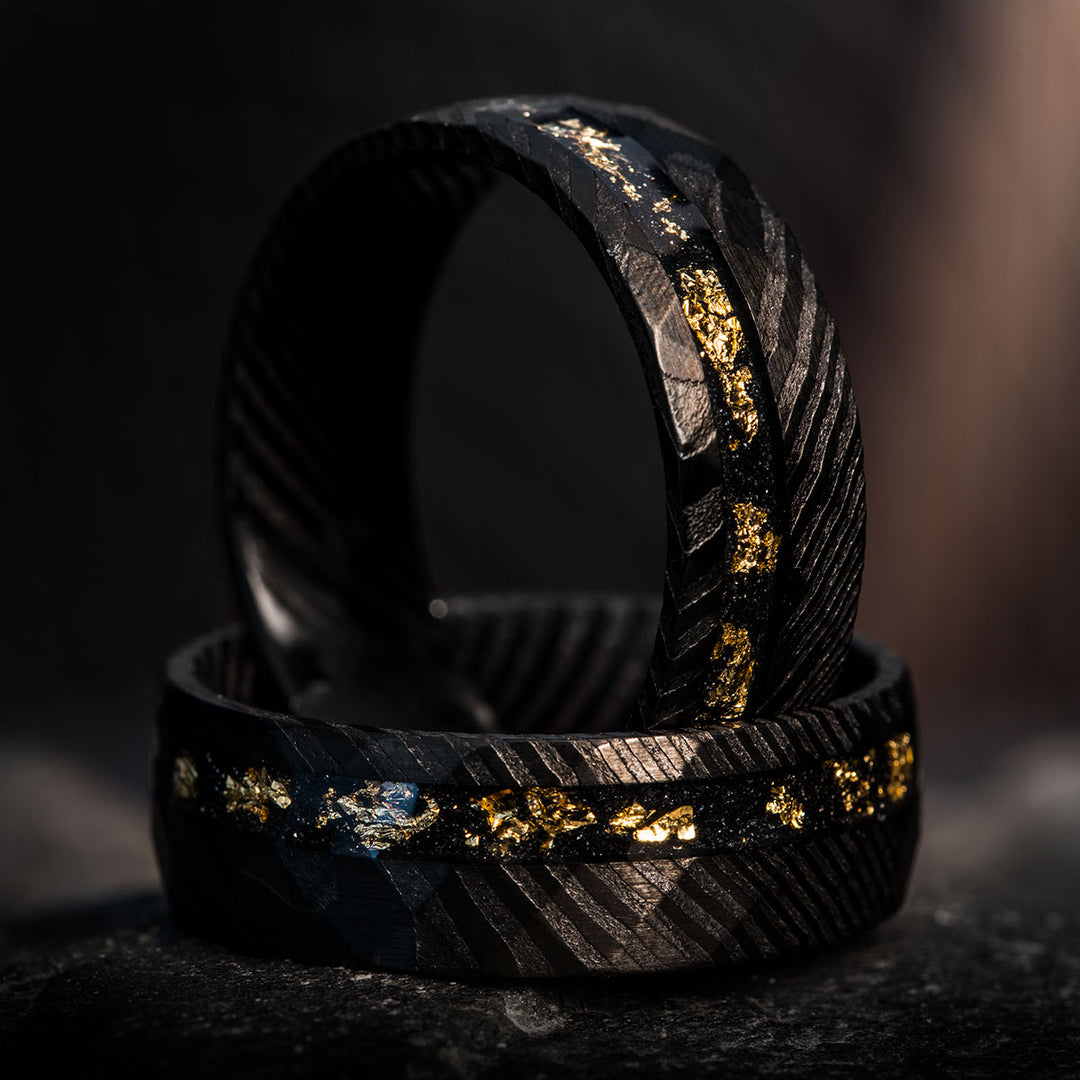
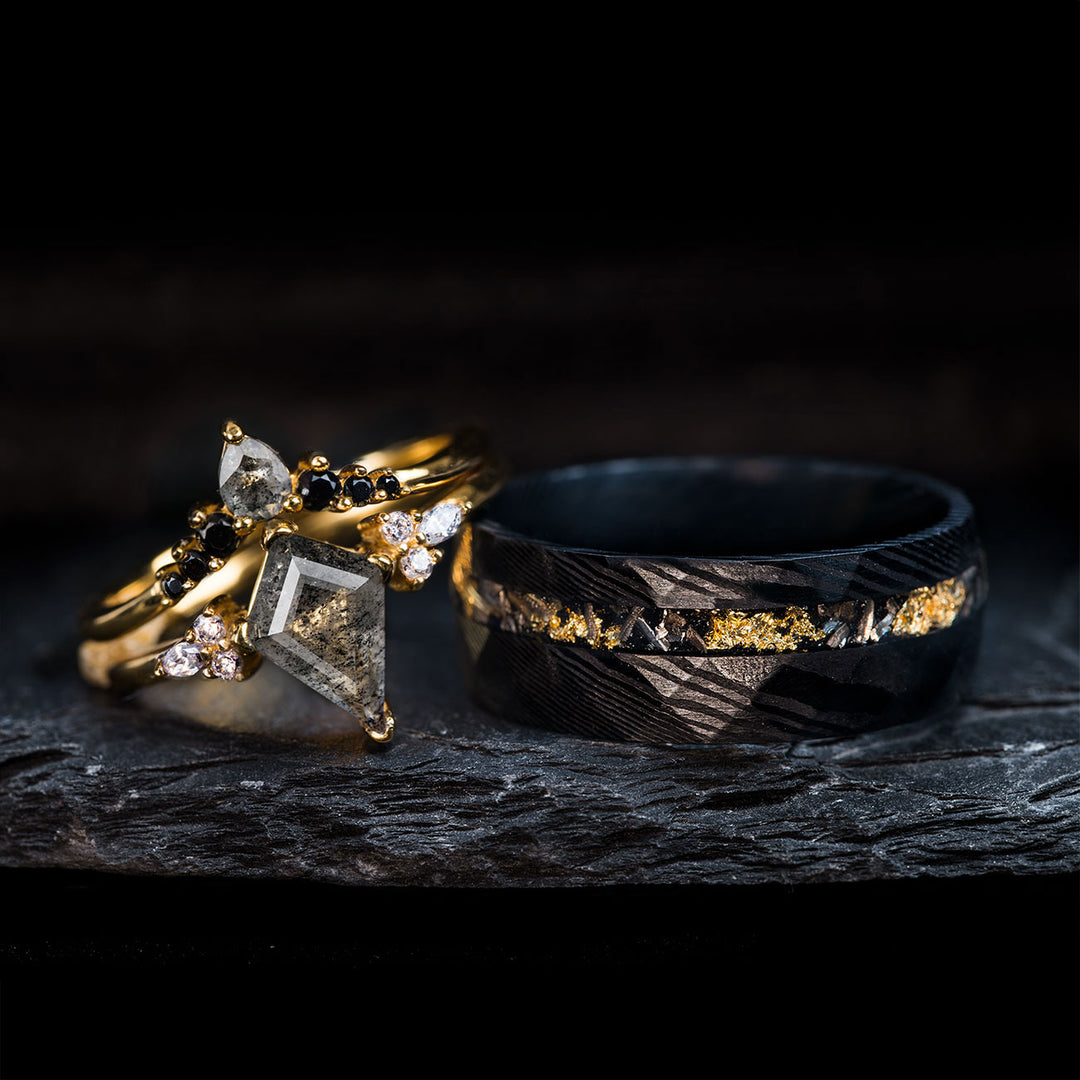
This style is made by taking small, chopped bits of carbon fiber and mixing them with resin. This mixture is placed into a mold and pressed under high heat. Because the fibers are tossed in randomly, they point in every direction. This creates a marbled or “shredded” look. No two rings ever look the same because the “grain” of the fibers is always unique.
Key Features:
- Ultra lightweight: It feels like holding a feather. You might actually forget you are wearing it.
- Modern, luxury aesthetic: It has a matte or semi-gloss finish that looks like dark marble.
- No metal base: This makes it perfect for people with metal allergies or those who work in jobs where metal rings are a safety risk.
What Is a Carbon Fiber Inlay Ring?
Inlay designs offer a middle ground. They combine the look of carbon fiber with the familiar weight and strength of a metal band, making them a popular choice for a carbon fiber wedding band.
In this construction, a jeweler takes a tough metal like titanium, tungsten, or stainless steel and carves a channel around the outside. They then lay a piece of woven carbon fiber into that channel and seal it with a clear coating. The carbon fiber here is decorative. It provides the style, while the metal provides the skeleton. Most inlay rings use the “twill” pattern, which is the classic checkered look most people associate with carbon fiber.
Key Features:
- Metal structure: The metal frame protects the carbon fiber from being crushed or bent.
- Traditional feel: If you like a ring that has some “heft” to it, the metal core provides that.
- Consistent design: Unlike the random patterns of forged carbon, the weave in an inlay is uniform and symmetrical.

Forged Carbon vs Inlay Rings: Key Differences
Choosing between these two comes down to how you spend your day. One focuses on being invisible and light, while the other focuses on being a solid piece of hardware.
1. Weight
A forged carbon fiber ring is incredibly light. It weighs much less than even titanium. If you hate the feeling of something heavy swinging on your hand, this is the winner.
Inlay rings are different. Their weight depends entirely on the metal used. A tungsten inlay ring will feel very heavy and substantial. A titanium inlay will be lighter but still heavier than a solid carbon ring. This is a personal choice; some people want a ring to feel “expensive” through weight, while others want comfort.
2. Feel & Comfort
Forged carbon has a “warm” feel. It doesn’t get freezing cold in the winter or burning hot if you leave it in the sun. It feels soft against the skin, almost like a high-quality hard wood or polished stone. It is the king of all-day wear.
Inlay rings feel like traditional jewelry. They are cool to the touch and have a smooth, metallic interior. If you are used to wearing rings for men made of gold or steel, the inlay will feel more familiar to you.
3. Durability
Durability is a bit of a toss-up. Forged carbon is very hard to shatter. Because the fibers go in all directions, it absorbs impacts well. However, the resin surface can get small scratches over time if you rub it against concrete or bricks.
Inlay rings are usually tougher overall because of the metal. If the ring is made of tungsten, the metal part is almost impossible to scratch. However, the clear coating over the carbon fiber inlay can sometimes scratch or crack if hit hard enough.
- Inlay: Stronger overall structure.
- Forged: Better at taking a direct hit without breaking, but the surface is softer.
4. Style & Appearance
Forged carbon is for the person who wants something one-of-a-kind. The marbled pattern is dark, moody, and unique. It looks great with casual clothes and tech-wear.
Inlay rings have a more “refined” and traditional look. The contrast between the shiny metal edges and the black carbon center is very sharp. It fits in well at a wedding or a business meeting where you want a bit of a classic touch.
5. Everyday Practicality
For a very active lifestyle, like gym enthusiasts or hikers, forged carbon is great because it doesn’t get in the way. For someone who wants a ring that will look exactly the same years later, an inlay ring (especially with a tungsten base) is the safer bet for long-term wear.
Which Carbon Fiber Ring Style Fits Your Lifestyle?
Your choice should be based on your daily habits. Consider what you do with your hands and how much you want to notice your ring during the day.
Choose Forged Carbon If You:
- Want the lightest ring possible.
- Have a unique style and like the “marbled” look.
- Have sensitive skin or metal allergies.
- Work with your hands and don’t want a heavy metal object hitting things.
Choose Inlay If You:
- Like the weight and “solid” feel of a traditional ring.
- Want a ring that matches other metal accessories like a watch.
- Are looking for a permanent carbon fiber wedding band that lasts decades.
- Prefer the classic, organized look of woven carbon fiber.

Picking Your Favorite Carbon Fiber Ring
Choosing between these styles really depends on what feels right on your finger. If you want something so light you’ll forget it’s even there, go for the forged carbon. It’s got that cool, unique marbled look. If you like a ring with some weight and want the extra protection of a metal frame, the inlay is the way to go. Both are great upgrades from traditional gold bands.
FAQs
Q1: Do carbon fiber rings scratch easily?
Carbon fiber itself is very tough, but the resin used to bond it is a type of plastic. This means it can develop fine scratches over months of hard use. You can often buff these out, but they aren’t as scratch-proof as a material like tungsten.
Q2: Which is better for everyday wear?
If “everyday wear” means you want to forget you’re wearing a ring, forged carbon is better. If it means you want a ring that can survive being banged against tools and doors without a mark, a tungsten inlay ring is the better choice.
Q3: Are carbon fiber rings good for wedding bands?
Yes, they are becoming very popular. Most people choose an inlay for a wedding band because the metal makes it feel more “official” and durable for a lifetime of wear. However, forged carbon is a great pick for someone who wants a non-traditional wedding ring.