

Your wedding band is an enduring daily symbol of love and shared commitment. Consistent, mindful care ensures these precious rings retain their original brilliance and structural integrity over a lifetime. This comprehensive guide covers everything you need to know to clean, protect, and maintain your wedding bands across diverse metal and organic materials.
General Cleaning Principles for Precious Wedding Bands
Routine, gentle cleaning is effective for most wedding bands, regardless of their material composition. Regular care removes body oils, cosmetic buildup, and environmental grime before they dull the ring's luster.
A solution of warm water and mild dish soap provides a safe, universal cleaning foundation for fine jewelry. Soak your ring in the soapy solution for a few minutes to loosen surface residue. For hard-to-reach contours or detailed engravings, gently scrub with a soft-bristled toothbrush. Rinse the ring thoroughly under warm running water and pat completely dry with a clean, lint-free microfiber cloth. Avoid abrasive household chemicals unless specifically approved for your ring's material.

Specialized Care for Unique Wedding Band Materials
Because modern couples choose distinctive jewelry compositions—from aerospace metals to organic inlays—different materials require specialized maintenance techniques.
Silver Wedding Rings
Sterling silver rings naturally react with sulfur in the air over time, causing surface tarnish. You can effectively restore their shine using several safe methods:
- Soap and Water: For routine daily maintenance, mix a few drops of mild dish soap into warm water. Soak the silver band for 5 to 10 minutes, brush gently with a soft toothbrush, rinse thoroughly, and dry with a soft cloth.
- Baking Soda and Aluminum Foil: For heavy tarnish, line a bowl with aluminum foil (shiny side up) and place the ring directly on the foil. Add one tablespoon of baking soda per cup of boiling water and pour it over the ring. The chemical ion transfer lifts tarnish in 2 to 5 minutes. Carefully remove with tongs, rinse in cool water, and dry.
- White Vinegar and Baking Soda: For moderate oxidation, create a mixture of white vinegar and baking soda. Once effervescence settles, soak the ring for 2 to 3 hours, then rinse and dry thoroughly.
- Jewelry Polishing Cloths: Specially treated silver polishing cloths quickly remove surface oxidation without chemical baths.
Maintaining Gold Wedding Rings
Yellow, white, and rose gold alloys offer classic warmth, but their relatively softer composition makes them susceptible to fine surface scratches. Gentle cleaning prevents surface wear:
- Warm Water and Mild Soap: Soak gold rings in a mixture of warm water and mild dish soap for 20 to 40 minutes. Gently clean the setting with a baby toothbrush, rinse with clean warm water, and buff dry with a soft cloth. This method is safe for both rhodium-plated white gold and rose gold alloys.
- Specialized Gold Cleaners: Commercial jewelry cleaning solutions formulated specifically for precious gold alloys provide an effective deep clean.

Cleaning Tungsten Wedding Bands
Tungsten wedding bands are renowned for their exceptional hardness and scratch resistance, requiring minimal maintenance compared to traditional precious metals:
- Clean using warm water, mild liquid soap, and a soft-bristled toothbrush.
- Wet the ring, apply mild soap to the brush, and gently clean along the beveled edges and grooved patterns.
- For stubborn residue, soak the band in soapy water for approximately 30 minutes prior to brushing.
- Rinse with warm running water and dry completely with a clean cotton towel.
- Harsh chemicals containing ammonium hydroxide, bleach, or chlorine must be avoided to prevent spotting. Do not use ultrasonic cleaners on tungsten bands with organic inlays.
Dinosaur Bone Wedding Bands
Authentic fossilized dinosaur bone rings are stabilized with protective jewelry-grade resin and require mindful handling:
- Avoid prolonged submersion in water or high-humidity environments.
- Remove the ring before heavy lifting or working with household cleaning chemicals.
- To clean a dinosaur bone wedding band, mix warm water with mild dish soap and gently wipe down the inlay with a damp cloth or soft brush without soaking the entire piece.
- Rinse briefly with cool water and dry thoroughly with a microfiber cloth.
Opal Wedding Bands
Opals are hydrated gemstones that require delicate handling to protect their internal play-of-color structure:
- For solid opal rings, prepare a mixture of warm water and a drop of mild detergent. Gently wipe down the setting with a soft cloth and dry immediately.
- For doublet or triplet assembled opals, never submerge the ring in water. Instead, dampen a soft cloth with the soapy solution to wipe the surface, then wipe with a damp water-only cloth and dry completely.
- Never use ultrasonic cleaners, steam machines, bleach, or abrasive scrubbers on men's opal rings.
Meteorite Wedding Bands
Authentic meteorite wedding bands contain natural iron-nickel alloys (such as the Widmanstätten pattern) and require dedicated moisture and rust protection:
- If light surface rust appears, gently brush the affected area with a soft toothbrush dipped in mineral oil or WD-40.
- After cleaning, apply a thin protective layer of microcrystalline wax (such as Renaissance Wax) to seal the surface and repel ambient moisture.
- Avoid exposing meteorite rings to standing water, swimming pools, or acidic chemicals.
- Store your meteorite band in a sealed, dry, airtight container with a silica desiccant pack when not in use.
Titanium Wedding Bands
Titanium wedding bands are lightweight, durable, and completely hypoallergenic, making them exceptionally easy to maintain:
- Soak standard titanium rings in a solution of warm water and mild liquid soap for 5 to 10 minutes.
- Gently wipe the band with a microfiber cloth, rinse thoroughly, and dry completely to prevent water spots.
- For anodized (colored) titanium rings, rinse in soapy water and pat dry without scrubbing to protect the oxide color layer.
- Minor surface scuffs on polished titanium can be refreshed using a specialized metal polish cream and a soft buffing cloth.
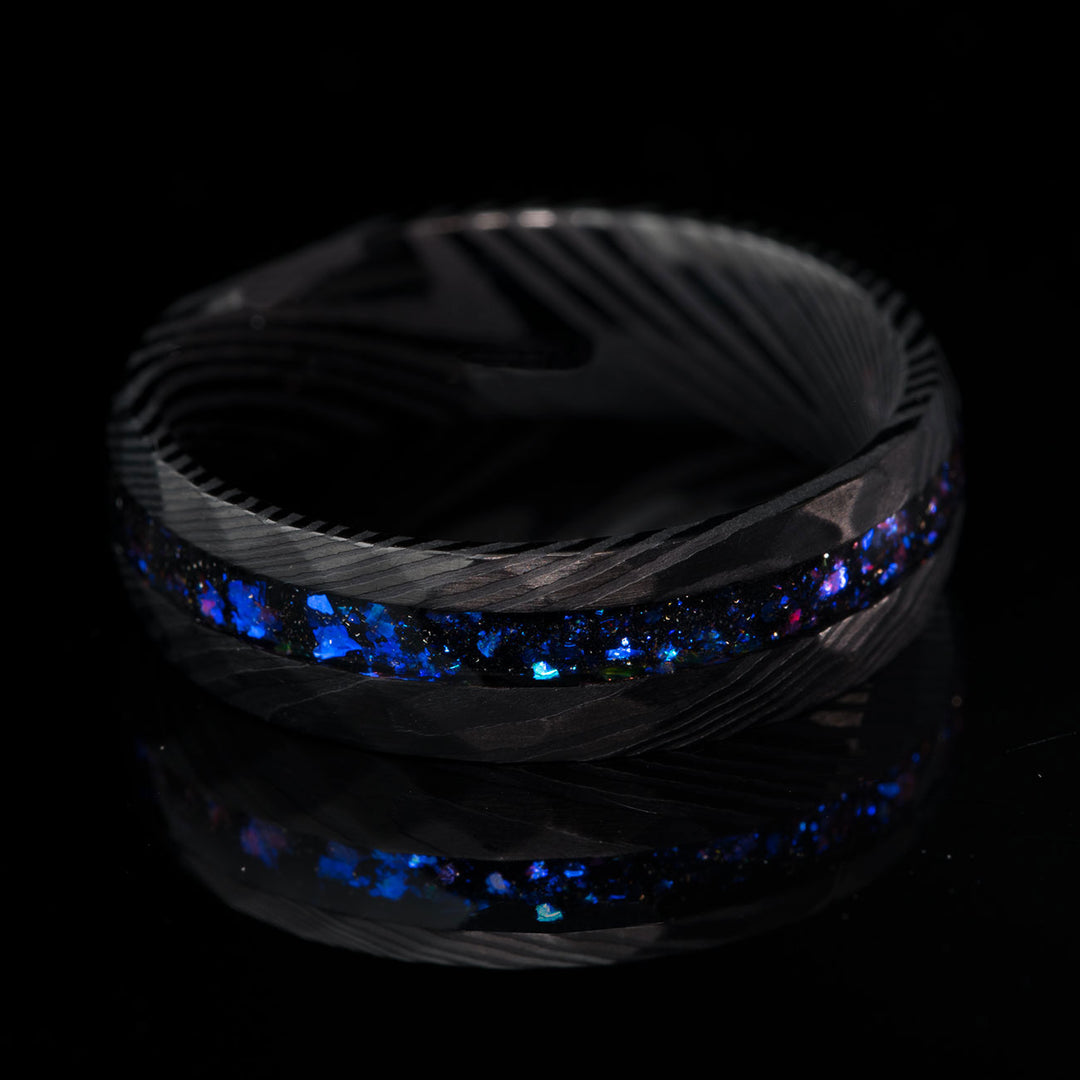
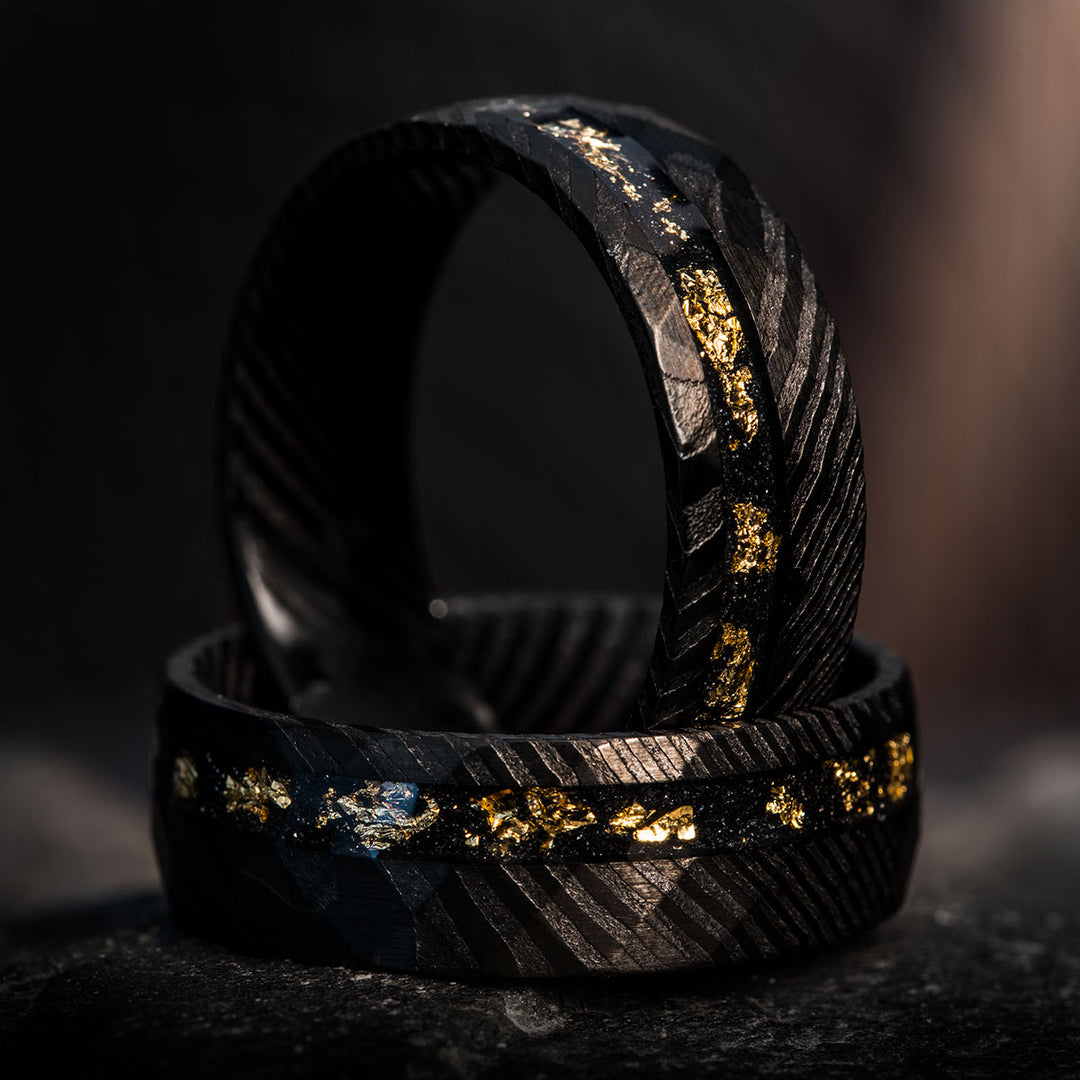
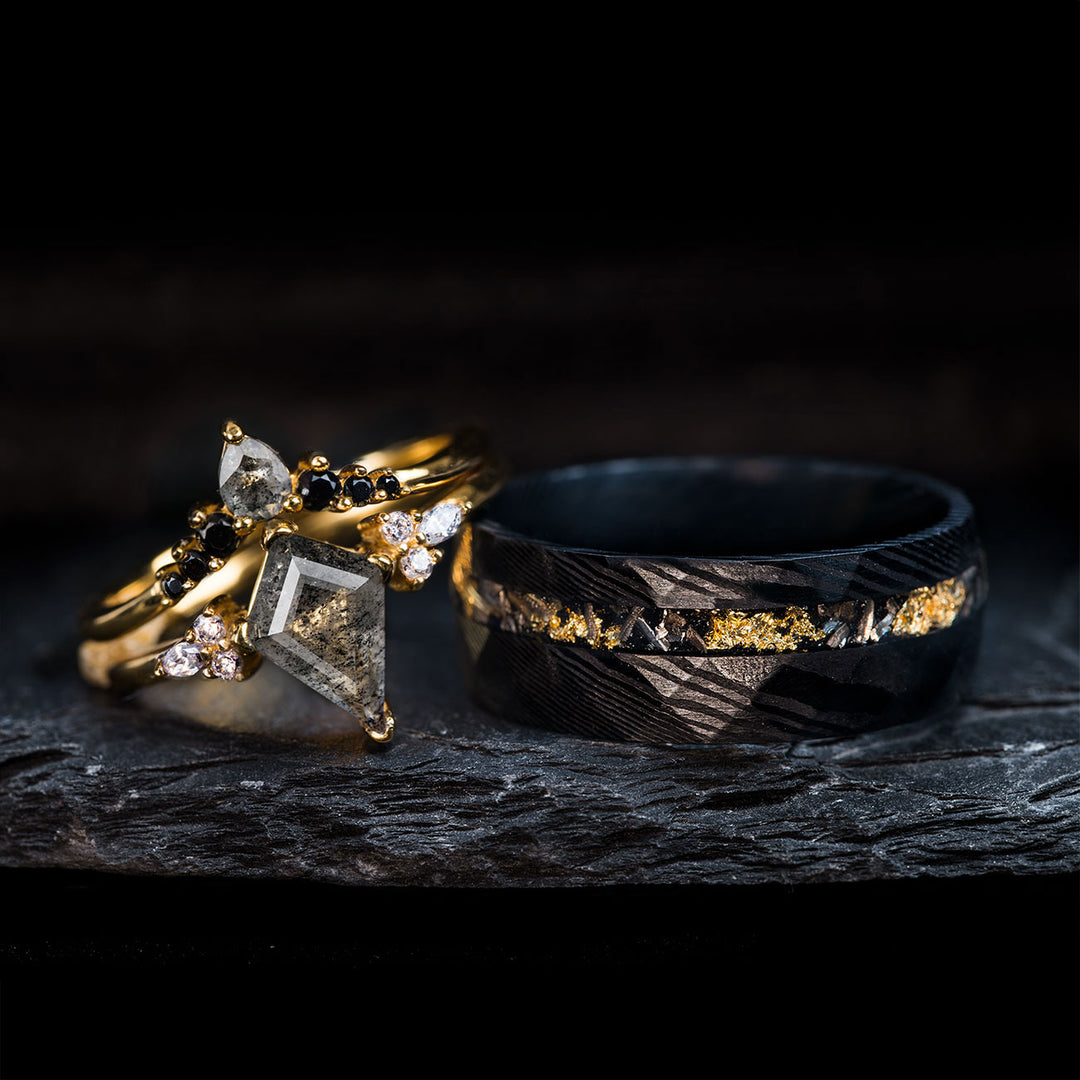
Damascus Steel Wedding Bands
Damascus steel bands are celebrated for their distinctive folded grain patterns and strength; when compared with tungsten rings, they also require minimal routine maintenance:
- For matte finishes, apply mild liquid soap with a soft sponge, gently wash under warm water, rinse, and dry completely.
- For polished finishes, a dab of non-abrasive polishing paste applied with a soft microfiber cloth restores shine and accentuates the etched contrast.
- Always dry Damascus steel completely after washing to prevent moisture accumulation within etched surface ridges.

Wood Wedding Bands
Wood wedding bands and inlays feature sealed resin finishes, but still require protective habits to ensure long-term durability:
- Remove wood rings before showering, swimming, or washing dishes to avoid extended moisture saturation.
- Keep wood bands away from aggressive solvents, hand sanitizers, and abrasive household cleaners.
- To clean, wipe with a damp cloth and occasionally condition the wood surface with a drop of natural mineral oil or beeswax.
Antler Wedding Bands
Antler wedding bands feature stabilized organic material protected by jewelry-grade sealants:
- Avoid long-term soaking or water submersion.
- Clean by wiping gently with a soft cloth dampened with warm, soapy water.
- Rinse quickly with cold water and dry immediately with a clean microfiber cloth.
Carbon Fiber Wedding Bands
Carbon fiber is a high-tensile, lightweight composite widely favored for modern jewelry. To clean a carbon fiber wedding band:
- Soak the ring in warm water with a few drops of dish soap for 3 to 5 minutes.
- Gently wipe the composite surface with a soft-bristled brush or microfiber cloth.
- Rinse in clean water and pat completely dry.

Everyday Habits for Wedding Band Protection
Mindful daily wear habits significantly minimize accidental wear and tear on fine jewelry:
- Select low-profile bands for active lifestyles: If you engage in heavy manual work or sports, choose flush-set, low-profile designs that resist snagging.
- Remove during heavy exertion: Take your ring off before gym workouts, weightlifting, gardening, or automotive repair.
- Avoid chemical exposure: Remove jewelry before handling household bleach, chlorine in pools, or abrasive cleaning compounds.
- Apply personal care products first: Allow lotions, colognes, and sunscreens to absorb fully before putting on your wedding band to avoid oily residue buildup.
- Store safely overnight: Remove rings before sleeping to prevent prong snagging against bedding and minimize friction against nightstands.
Long-Term Professional Maintenance
In addition to regular home care, professional maintenance keeps your jewelry in optimal condition:
- Annual Professional Inspection: Visit a professional jeweler once a year for ultrasonic cleaning (for compatible metals), prong checks, stone tightening, and surface buffing.
- Dedicated Jewelry Storage: Store wedding bands separately in fabric-lined compartments or soft pouches. For iron-rich meteorite bands, use an airtight container with silica gel packets to prevent humidity exposure.
Cherishing Your Wedding Bands for a Lifetime
Proper maintenance ensures that your wedding rings remain as pristine and meaningful as the day you exchanged vows. By understanding the unique properties of your ring's materials, cleaning regularly with gentle methods, and practicing mindful daily wear, you can preserve the beauty and structural integrity of your wedding bands for generations to come.