

Knowing the difference between wedding rings and engagement rings is essential for anyone preparing to walk down the aisle. These two distinct pieces of jewelry represent different milestones of romantic commitment, each carrying its own history, design profile, and emotional significance. Today, couples enjoy greater freedom to customize their rings—making an understanding of these differences key to choosing meaningful, enduring jewelry.

What's the Difference Between Engagement and Wedding Rings?
Engagement rings mark the proposal proposal moment—they are intentionally designed as statement pieces that announce your upcoming marriage to the world. In contrast, wedding rings represent daily married life. Engineered for long-term comfort and durability, wedding bands symbolize the vows exchanged during your marriage ceremony. While both represent lifelong love, they serve distinct roles in your relationship journey.
| What Makes Them Different | Engagement Ring | Wedding Ring |
| When You Receive It | During the proposal | During the wedding ceremony |
| Core Significance | "Will you marry me?" (Promise to marry) | "I do" (Official marriage commitment) |
| Design Characteristics | Prominent center stone or diamond | Sleek band designed for daily wear |
| Wearing Timeline | From proposal through marriage | Continuously after saying "I do" |
| Traditional Placement | Left ring finger | Left ring finger, worn beneath the engagement ring |
| Style Variety | Solitaires, halos, vintage settings, colored gems | Classic bands, matching sets, textured alternative metals |
| Who Wears Them | Traditionally, women; increasingly, both partners | Both partners exchange rings |
Where Did Engagement and Wedding Rings Come From?
How Engagement Rings Started
Engagement rings originated in Ancient Rome as a public symbol of a couple's formal intent to marry. The tradition surged in popularity during the Victorian era when diamonds became the centerpiece, symbolizing enduring love and commitment. Today, couples select from classic diamond solitaires, vibrant colored gemstones, vintage heirlooms, and contemporary custom designs.
How Wedding Rings Started
Wedding bands boast an even older heritage, originating in Ancient Egypt, where the unbroken circle symbolized eternal, infinite love. During the Middle Ages, couples often inscribed romantic poetry or religious sentiments inside posy rings. Modern wedding bands incorporate durable metals such as gold, platinum, and titanium, often customized with personal engravings or mixed-material inlays.

Design Differences: Engagement Rings vs. Wedding Rings
Because engagement and wedding rings fulfill different roles, their design profiles differ considerably. While engagement rings serve as prominent statement pieces, wedding bands are engineered for daily comfort and structural durability.
| Design Element | Engagement Rings | Wedding Rings |
| Overall Style | Eye-catching statement piece | Understated, ergonomic, durable |
| Gemstone Features | Prominent center stone, accent pavé, halo accents | Unadorned metal or channel-set accent stones |
| Profile Height | Elevated setting to highlight the gem | Low profile to prevent snagging during daily tasks |
| Band Width | Often slender to accentuate the centerpiece | Wider profiles for enhanced structural strength |
| Custom Options | Unique center stones, vintage filigree, colored gems | Custom engravings, wood inlays, textured finishes |
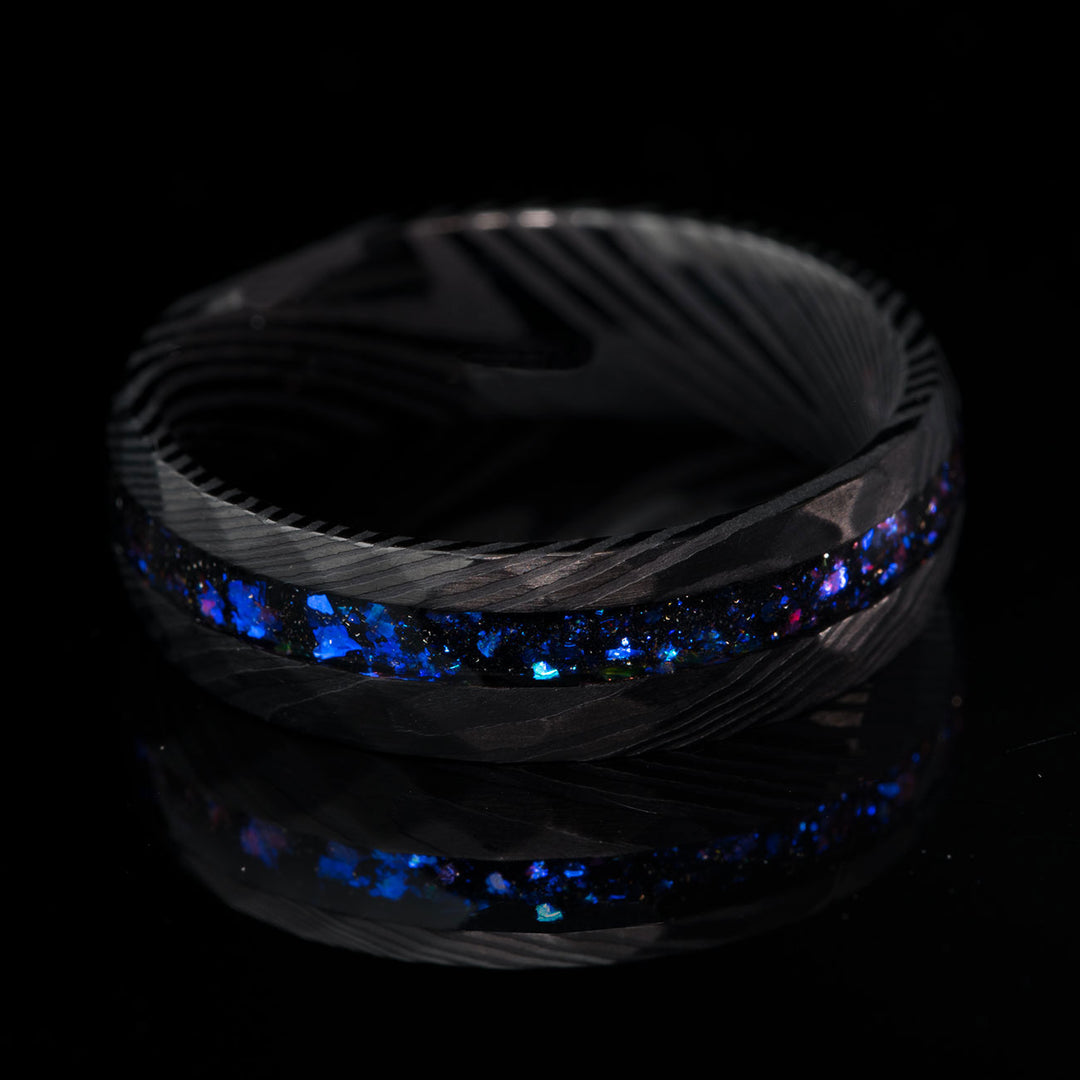
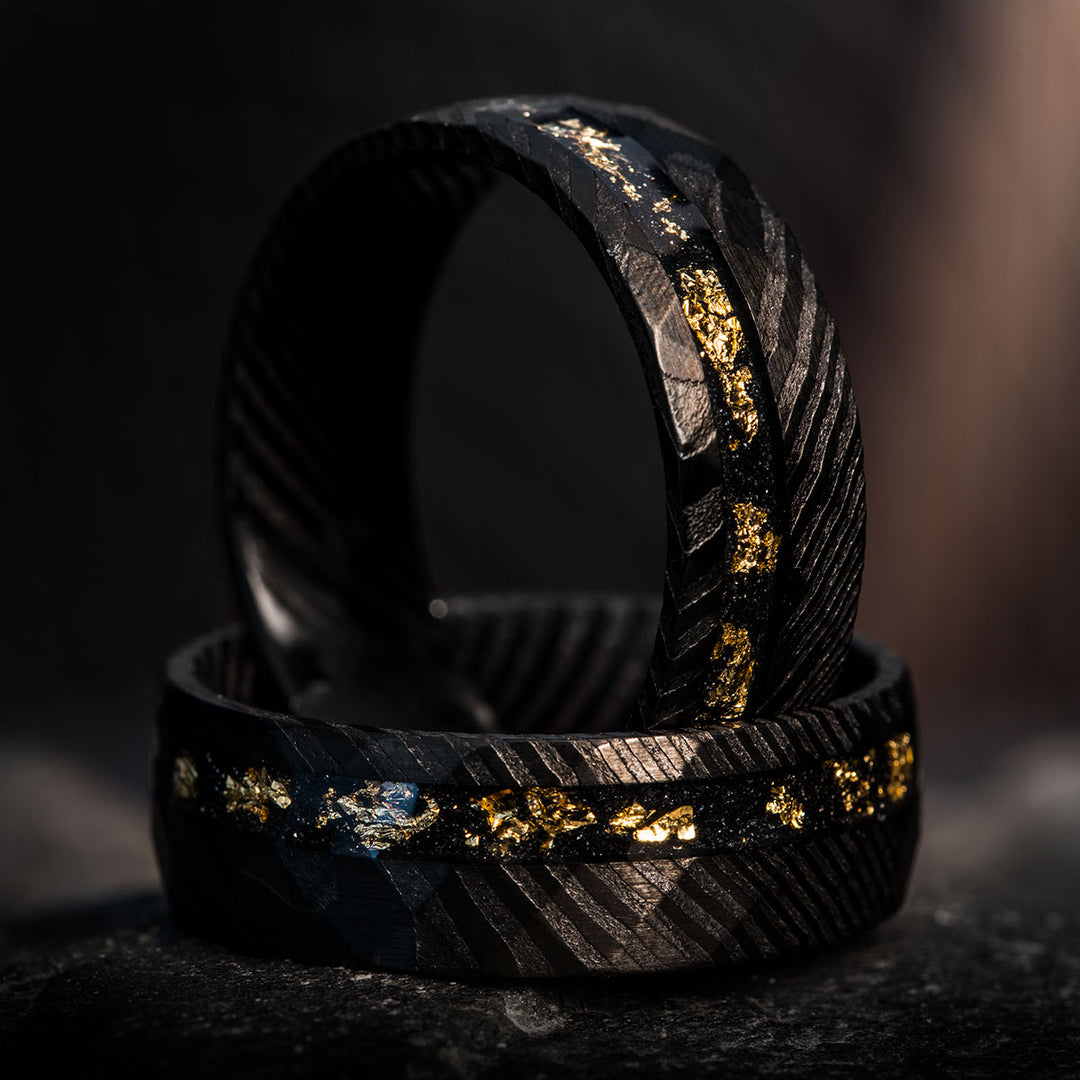
| Popular Materials | Platinum, yellow gold, white gold | Gold, platinum, titanium, tungsten, Damascus steel |
| Modern Trends | Lab-grown diamonds, east-west stone orientations | Meteorite inlays, black titanium, beveled edges |
| Gender Options | Traditional women's designs; emerging men's styles | Matching bridal sets, unisex ergonomic bands |
Engagement rings capture attention and express personal style, whereas wedding rings provide effortless everyday wearability. Both play a meaningful role in your love story—one marking the proposal, and the other accompanying you through every day that follows.

How to Wear Engagement and Wedding Rings: Traditional vs. Modern Ways
The Traditional Approach
Traditionally, both rings are worn on the left ring finger, with the wedding band placed first so that it sits closest to your heart, underneath the engagement ring. This classic stacking arrangement honors the chronological progression from courtship to marriage.
The Modern Approach
Modern couples enjoy complete flexibility in how they style and wear their rings. Some wear their engagement ring on the right hand and wedding band on the left, others reverse the stack order, and many wear only the wedding band on a daily basis. Contemporary ring fashion prioritizes lifestyle comfort over rigid rules, with popular choices including stacked enhancer bands and versatile dual-purpose rings.
Finding What Works Best for You
Your ring setup should seamlessly accommodate your daily routine. If you work with your hands or lead an active lifestyle, a low-profile wedding band is often the most practical choice. If you love fine jewelry, you can build a multi-ring stack with custom guard bands. Choose the arrangement that feels most natural and comfortable for you.
Why Both Rings Matter to Couples
Rings serve as tangible daily symbols of mutual dedication and partnership.
Engagement Rings for Women
For many brides, women's engagement rings hold profound sentimental value. Whether selecting a timeless solitaire or designing a bespoke setting, the ring marks the beginning of a shared lifetime.
Engagement Rings for Men
Men's engagement rings are rapidly growing in popularity. Reflecting a modern focus on equal commitment, these designs feature bold materials, matte finishes, brushed textures, and discrete gem accents.
Men's Wedding Bands
Men's wedding bands have evolved far beyond standard gold rings. Grooms now choose from diverse materials and finishes tailored to their professions and aesthetics—ranging from sleek satin finishes to mixed-metal designs.
Women's Wedding Bands
Women's wedding bands offer extensive styling versatility. Brides can select contoured bands that flush-fit against their engagement ring, opt for standalone diamond eternity bands, or choose textured metal bands for subtle sophistication.
Frequently Asked Questions about Engagement and Wedding Rings
Q1. Can you wear the same ring as both an engagement and wedding ring?
Yes, absolutely. Many couples opt for a single ring that fulfills both roles—often known as a "bridal set" or standalone commitment ring. This approach is practical, budget-conscious, and perfect for minimalists who prefer wearing a single piece of jewelry.
Q2. Do men wear engagement rings?
While historically uncommon, men's engagement rings are increasingly embraced by contemporary couples. Wearing a ring during the engagement period allows both partners to celebrate the milestone equally.
Q3. What are the most popular alternative materials for men's wedding bands?
Modern grooms frequently choose high-performance materials such as meteorite, carbon fiber, and black titanium. These alternative metals offer exceptional durability, lightweight comfort, and distinct visual textures.
Q4. Are non-traditional engagement rings acceptable?
Definitely. Non-traditional engagement rings featuring unique gemstones, asymmetrical silhouettes, or custom engravings are widely favored by couples seeking sustainable, personalized jewelry that reflects their individual style.
Q5. Do wedding rings and engagement rings need to match?
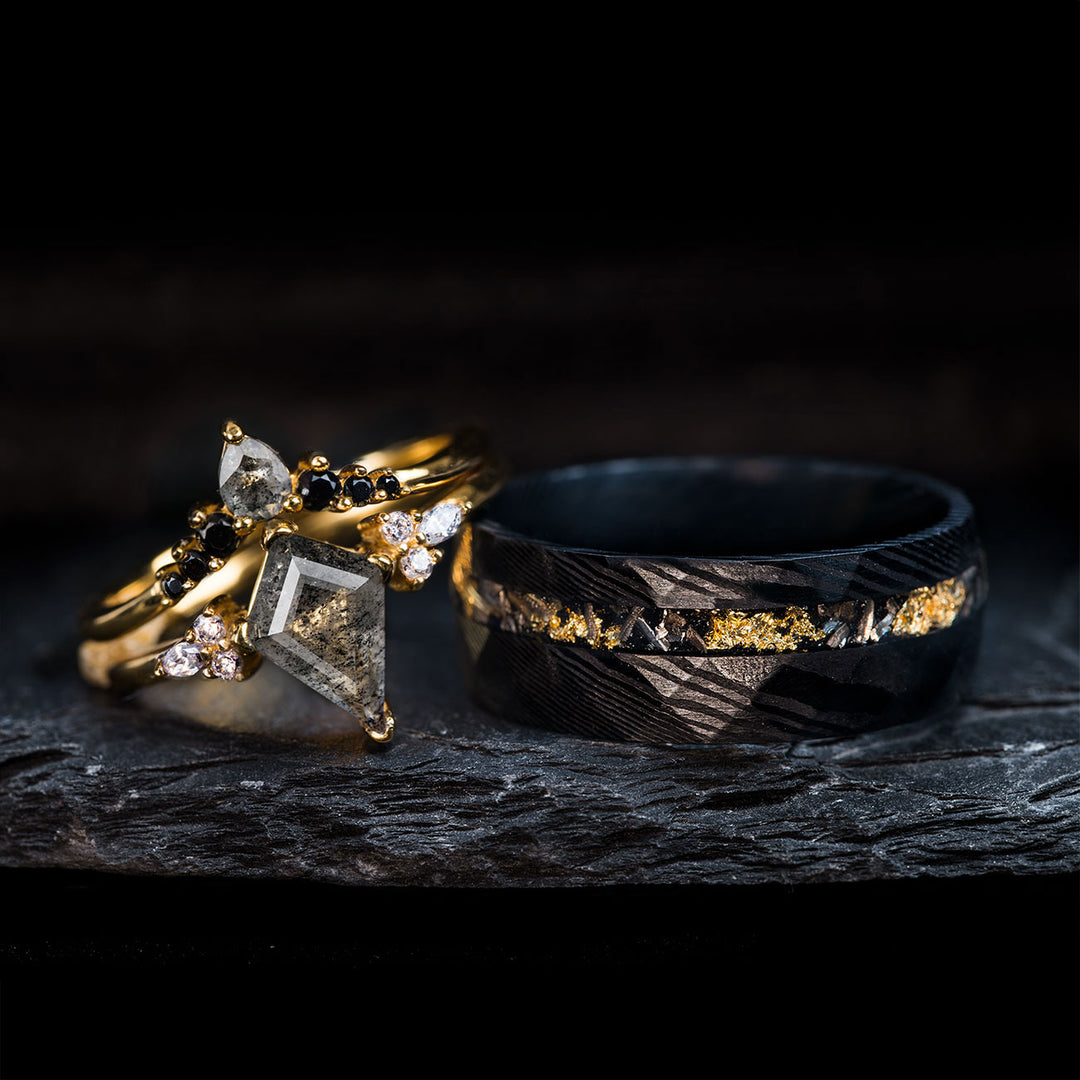
Not necessarily. While matching metals and widths create a unified aesthetic, mixed-metal pairings—such as a rose gold engagement ring paired with a platinum wedding band—offer an appealing, modern contrast.
Finding the Perfect Rings for Your Love Story
Choosing engagement and wedding rings is ultimately about crafting a lasting, personal symbol of love. Whether you are drawn to unique couple ring sets, timeless solitaires, or distinctive mixed-metal bands, the ideal rings are those that reflect your unique journey together.